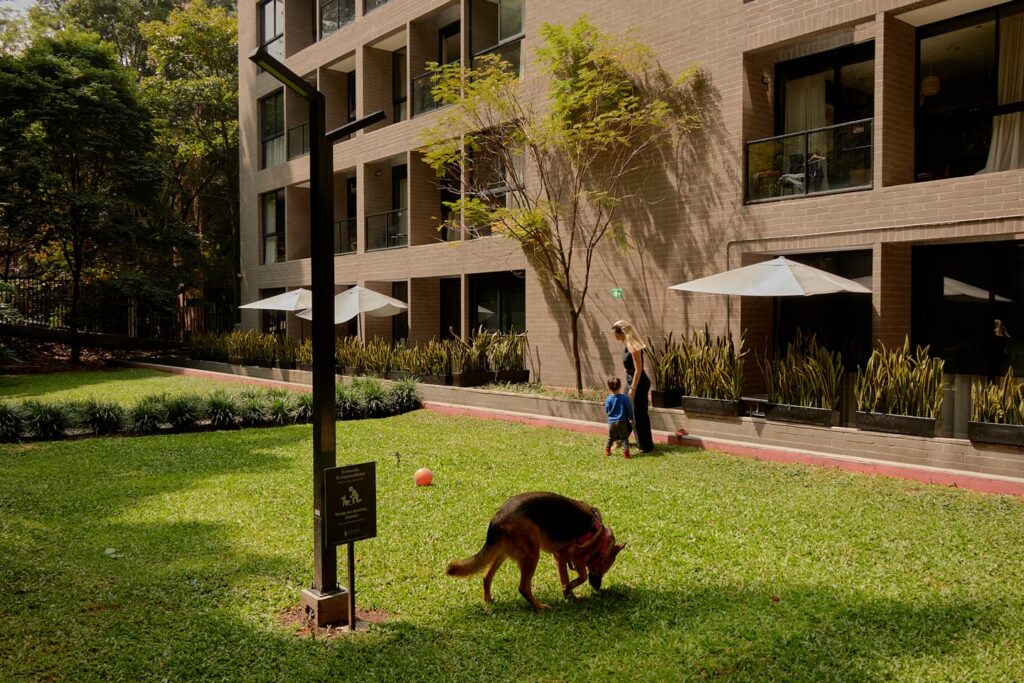
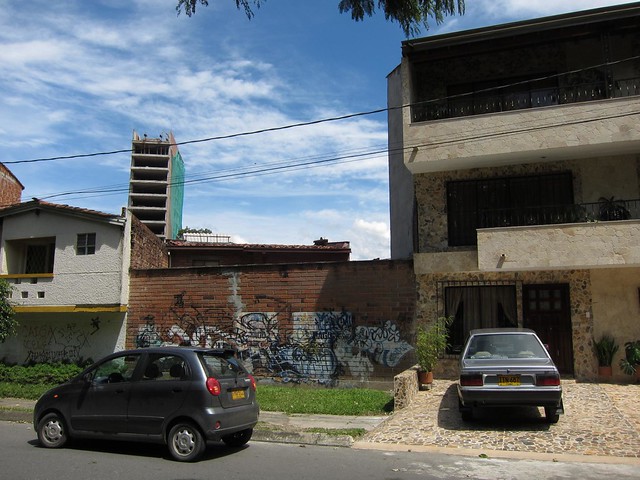
On December 2, 1993, Pablo Escobar was gunned down on a rooftop in western Medellin while trying to flee Colombian security forces.
It was the culmination of a massive manhunt involving the Colombian police, army, and a special unit called the Search Bloc, a group of vigilantes called Los Pepes (“People Persecuted by Pablo Escobar”), and the United States’ Drug Enforcement Agency.
When I arrived in Medellin five years ago, all I knew of the city was its association with Pablo Escobar and the Medellin Cartel.
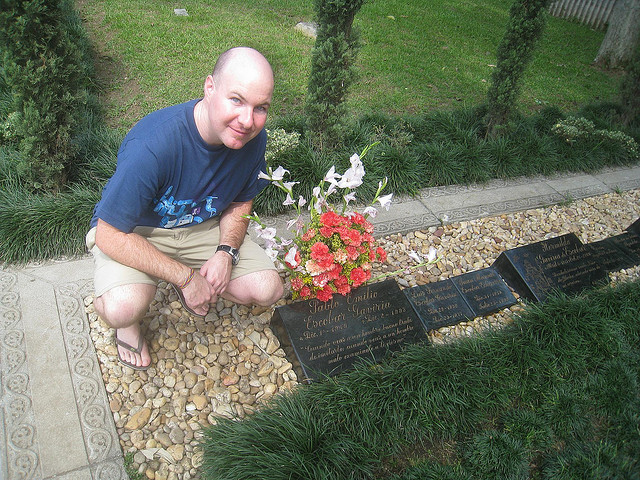
To satisfy my curiosity, I visited the address where he was killed, as well as his family grave in Itagui. I read Killing Pablo, Mark Bowden’s detailed account of how Escobar was finally taken down. But it wasn’t enough.
Last year, from May through November, a television series aired in Colombia called Pablo Escobar: Patron Del Mal (Boss of Evil).
The 74-episode show followed Escobar’s rise to power, as well as his downfall, and it was created by two people whose families were directly affected by his violence.
Camilo Cano is a journalist and son of Guillermo Cano, the editor and publisher of El Espectador newspaper based in Bogota. Guillermo was murdered by Escobar’s men due to his outspoken editorials against Escobar and the cartel.
Juana Uribe, Vice President of Caracol TV, is the daughter of Maruja Pachon, who was kidnapped on Escobar’s orders, and held hostage for six months as he fought to have Colombia’s Constitution amended to disallow Colombians from being extradited to the United States.
I wanted to watch El Patron del Mal when it first aired, but was busy traveling. In October of this year, when I learned the whole series was available online, for free, with English subtitles on Telemundo, I dove in.
I was hooked from the first episode, which I’ve embedded above to give you a taste for the show.
Each episode is about 45 minutes, and includes a few brief commercials. The first few run 45 to 55 minutes each, and then they start splitting the episodes into two 22-minute parts. In total, the series runs about 55 hours.
Now that I’ve watched the whole thing, I can say I learned far more than I would’ve picked up from reading another book, plus the television format brought the whole experience to life.
I liked that real news footage of political figures, key characters, and the aftermath of bombings were shown. It was a reminder that this wasn’t a work of fiction, like The Sopranos. It was a true story.
And because it was a true story, I was able to Google various characters as I watched to learn additional background info, of find out their fates.
The names of those still alive were changed slightly for the show, but it’s easy to find out the real names by referencing the list of characters on the show’s Wikipedia page.
A few observations, and things I learned:
- Escobar was a pathological liar, especially when it came to his family. He kept them all in the dark about his business as long as he possibly could.
- He was also a hypocrite. He’d regularly blame the police and army for human rights abuses, but had no problem ordering assassinations and the bombings of innocent people.
- And a serial adulterer, with a penchant for 15-year old girls and prostitutes. He broke the mold when he had an affair with a smart, beautiful TV presenter, Virginia Vallejo.
- Hacienda Napoles was 3-4 hours from Medellin by road. It was more than a finca, it was his Headquarters.
- Escobar’s fear of extradition to the United States fueled his war against the Colombian state, and its people.
- Most of the car bombings were directed at targets in Bogota and Cali, not Medellin.
- Kidnapping victims were chosen strategically to apply maximum pressure on the government.
- Escobar was ultimately successful in getting the Colombian Constitution amended to disallow extradition. After his death, it was changed back. Today, hundreds of drug traffickers and criminals are extradited to the United States each year.
- The Cali Cartel came very close to killing Escobar and his family by bombing the Monaco building where they were living in Poblado. The building still stands empty to this day.
- Escobar’s parents both outlived him. His mother played a bigger role in his life, while his father seemed distant and disconnected.
I found the first third of the series to be the most interesting, as we’re introduced to the cast of characters, and see Escobar in his early years. The middle third is filled with so much death and violence, and sadness, it’s depressing. You just want it to end.
And the last third tracks his gradual loss of power, including his reliance of kidnappings, brief incarceration at La Catedral, the prison he built himself on a mountaintop in Envigado, and ultimately, his death.
20 years have passed since his death, which marked the end of the Medellin Cartel, yet some of the key characters have been in the news recently.
Griselda Blanco, who introduces Escobar to the cocaine trade, and served time in the United States, was shot and killed September 3, 2012 while leaving a butcher shop in the upscale El Tesoro neighborhood of Medellin.
On July 25, 2013, Juan David Ochoa Vásquez, one of the founders of the Medellin Cartel, died of a heart attack.
In September, Escobar’s top hitman, Jhon Jairo Velasquez Vasquez (nicknamed “Popeye”) and portrayed by “Marino” in the show, was due to be released from jail after serving 23 years. Based on news reports, he may still have time to serve, so he’s not free just yet.
Popeye had confessed to killing 250 people personally, including his own girlfriend (which is portrayed in the show), and having been involved in the deaths of 3,000 more.
The numbers are staggering, and it’s a bit odd too, because in the show, he is portrayed as the most likable of Escobar’s hitmen. When asked in a recent interview how he can account for so much bloodshed, he says he was following orders, and in the thick of the “war” it all seemed justified. In hindsight, he of course says it is awful.
When he’s released from prison, the former hit man says he wants to work with the youth of Colombia to teach them they don’t need to live a life of crime simply to chase money and beauty queens.
If you’re interested in learning more about the rise and fall of Pablo Escobar, you can watch the whole series on Hulu (see all episodes here), Netflix depending on your location and Caracol Play.
__________
Pablo Escobar Historical Tour
To learn more about Escobar during your visit to Medellín, sign up for a half-day tour through Latin Hosts Medellín. Historical points of interest include the Monaco Building where the Cali Cartel tried to kill him, his last safe house where security forces did kill him and his family grave.